Magyar
 Deutsch
 Español
 Français
 Nederlands
 Polski
 Čeština
 Italiano
 Português
 日本語
日本語 Svenska
 Suomi
Suomi Slovenščina


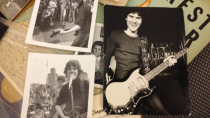
When the now world-famous "1-2-3-4!" command rang out within the musty walls of New York's CBGB club in 1974, part of the audience heard only noise. But there was someone behind the drums who knew exactly that what they were doing was the future.
Twelve years ago, one of the most influential figures in rock history of Hungarian origin passed away: Tamás Erdélyi, known to the world as Tommy Ramone, the legendary founding drummer, musical mastermind, and producer of the Ramones. Although his name became synonymous with the New York punk scene, his story began in Budapest: he was born here and spent the first seven years of his childhood here before his family emigrated to the United States after the 1956 revolution.
BUDAPEST ROOTS
Tamás Erdélyi was born on January 29, 1949, in Budapest, Hungary, into a Jewish intellectual family. His father, Zoltán Erdélyi, was a painter and photographer, while his mother also worked as a photographer. Both parents survived the horrors of the Holocaust with the help of neighbors and friends, although several members of their extended family perished during the genocide.
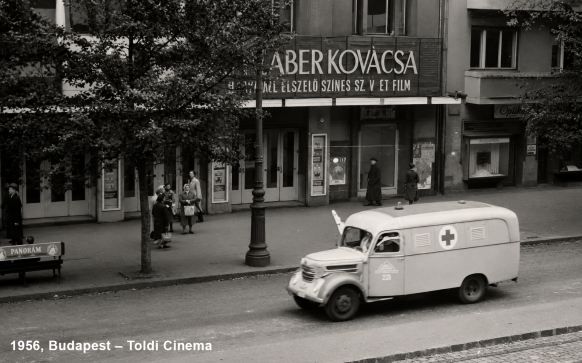
The family lived in downtown Pest at 36–38 Bajcsy-Zsilinszky Road, directly above the Toldi Cinema. Among Tamás's earliest memories were the magic of the movie theater, where he spent countless hours, and Margaret Island, where seeing a drummer perform at an open-air show inspired him to build his own homemade drum kit. Alongside city life, his experiences in the countryside also left a lasting impression. The family regularly spent their summers in Nógrád County, about 80 kilometers (50 miles) from Budapest.
He began his education at Szemere Bertalan Elementary School in Budapest's 5th District, located less than 200 meters from the family's apartment. Following the defeat of the 1956 Hungarian Revolution, the family decided to leave Hungary. Tamás was only seven years old. On the last day of school before the winter break, he said goodbye to his teacher, Mrs. Margit, with the innocent confidence of a child: "See you next year!" She replied simply, "Maybe not."
The family had time to take only what they could carry by hand. They first fled to Austria before eventually emigrating to the United States. Tommy later recalled that, as a child, the journey felt more like an adventure, even though it was an extraordinarily difficult period for his parents.
ARRIVAL IN AMERICA: ELVIS AND THE FIRST BANDS

The family arrived in the United States in 1957. After short stays in the Bronx and Brooklyn, they settled in Forest Hills, Queens, in the Verona Estates apartment complex. Tommy later recalled that he was always a bit of a solitary child, so adapting to the new environment affected him less than many other immigrants. Although Hungarian was his mother tongue, he soon learned English, but in his teenage years, he still spoke with a noticeable Hungarian accent. At home, the family preserved the Hungarian language throughout. This period coincided with the explosion of rock and roll: Elvis Presley, Little Richard, and Jerry Lee Lewis played on the radio, which completely fascinated young Tamás. During high school, in the mid-1960s, he also started playing music under the influence of the Beatles. His first band was
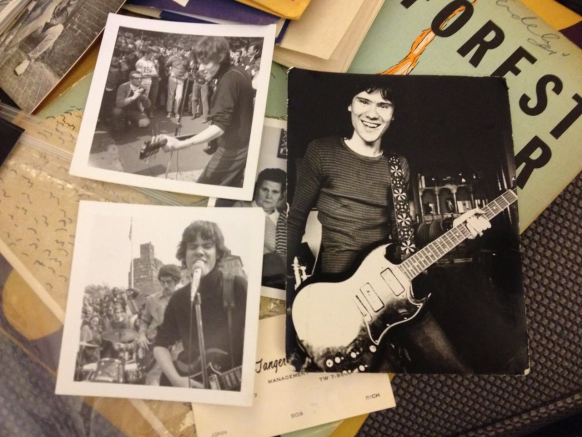
Tommy and the Tigers (later called Tiger Five). Around 1966, he founded the formation called Tangerine Puppets, in which his schoolmate John Cummings (later Johnny Ramone) played bass. In this band, Tamás played guitar, and Johnny was already famous for his aggressive stage presence. During this period, Tommy also met Jeff Hyman, the future Joey Ramone.
ENTHRALLED BY TECHNOLOGY: THE RECORD PLANT AND JIMI HENDRIX
Besides playing music, Tommy was at least as interested in the "magic" of the recording process. A chance encounter on the subway led him to a studio, where he immediately knew: this would be his path. Initially, he worked in an 8-track studio, then he got into one of the most modern institutions of the era, the Record Plant.
Here he witnessed the dawn of multi-track recording; he worked in the studio where one of the world's first two 24-track mixing consoles stood. As an engineer, he assisted in the recordings of Jimi Hendrix's Band of Gypsys era in 1969. He was fascinated by Hendrix's humility and work ethic. In addition to studio work, he was also deeply affected by filmmaking: working for a film production company, he spent his lunch breaks at screenings at MoMA (Museum of Modern Art), where he became acquainted with avant-garde film. This minimalist, "less is more" aesthetic later became crucial in shaping the Ramones' image.
THE BIRTH OF THE RAMONES AND THE "JUDY IS A PUNK" MOMENT
In the early 70s, Tommy decided during a vacation in London to return to active music-making. He founded a glam-rock band called Butch, but it soon disbanded. That's when he turned his attention to his former friends, Johnny and Dee Dee.
Originally, he didn't intend to be a member of the band. In his self-founded Performance Studios, he wanted to manage and produce the formation, while it was he who persuaded Johnny Ramone to return to music. Tommy already had a clear vision of what kind of band he wanted to create: a group playing short, fast, no-frills songs that completely broke with the long guitar solos characteristic of the rock music of the era.
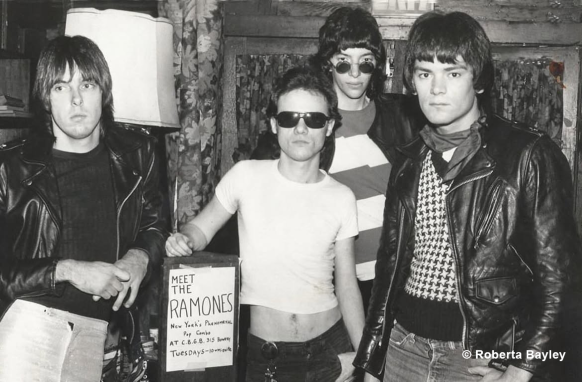
The lineup initially consisted of Joey (drums), Johnny (guitar), and Dee Dee (bass/vocals). Tommy soon noticed that Dee Dee couldn't handle the vocals while playing, but Joey had a unique voice, so he put him in front of the microphone. They then began searching for a drummer, but no one could play the tight, simple, and relentlessly fast style that Tommy envisioned. At rehearsals, he eventually showed the applicants how they should sound, and then, at the suggestion of the others, he sat behind the drums himself. He took the name Tommy Ramone, and thus the classic Ramones lineup was born.
According to Tommy's memories, the turning point came during a rehearsal in Queens when the boys played the song Judy Is a Punk. It was then he realized that something completely unique, forward-looking, and epoch-making had been born. He became the "architect" of the band, who held the eccentric and often conflicted members together while taking on a defining role as a drummer, producer, and songwriter. I Wanna Be Your Boyfriend was entirely his composition, and he wrote most of one of punk's best-known anthems, Blitzkrieg Bop. The song was originally titled Animal Hop, Dee Dee Ramone later gave it the title Blitzkrieg Bop, while the legendary "Hey! Ho! Let's Go!" chant was also Tommy's idea. His role in shaping the early Ramones sound is well illustrated by the fact that he later claimed credit for the iconic guitar riff of Pinhead and the birth of the now-cult slogan "Gabba Gabba Hey!".
LEAVING THE DRUMS AND THE EXPERIMENTS OF THE 80S
After three epoch-making albums (Ramones, Leave Home, Rocket to Russia), Tommy decided in 1978 to leave the band. Almost non-stop touring, as well as constant personal conflicts between the Ramones members, had completely worn him down over a long time. He later stated that looking back, he was probably struggling with clinical depression, so he felt that if he stayed in the band longer, he would break mentally. He handed the drums over to Marky Ramone but continued to play a defining role in the life of the Ramones as a producer and behind-the-scenes figure. He worked as a co-producer on the Road to Ruin album, then returned in 1984 as a producer for the making of Too Tough to Die.
Even after leaving the Ramones, he did not turn his back on music, but rather sought new directions. In the early 1980s, he established a close professional relationship with Joey Ramone's brother, Mickey Leigh, with whom he made several recordings - among others, in the formation called The Rattlers.
He also became a sought-after professional as a producer. He is credited with The Replacements' 1985 classic, Tim, as well as Redd Kross's album Neurotica. In 2002, he was again in contact with his former bandmates when he supervised the joint recording of Marky Ramone and C.J. Ramone as a producer, the song The Bowery Electric dedicated to the memory of Joey Ramone. Two years later, on October 8, 2004 - on Johnny Ramone's birthday - he took the stage again as a Ramone after a long time at the Ramones Beat Down on Cancer benefit concert with C.J. Ramone, Daniel Rey, and Clem Burke.
RETURN TO ROOTS: UNCLE MONK
In the later stages of his life, Tommy gradually moved away from loud rock music and turned towards acoustic, traditional American folk music. In 2006, he founded the formation called Uncle Monk with his partner, Claudia Tienan.
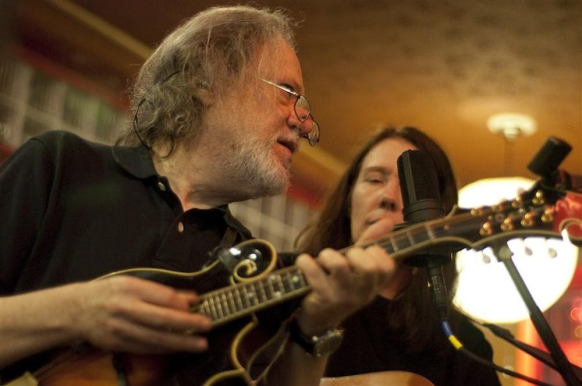
In the band, Tommy played mandolin and sang. Their music represented the "alt-bluegrass" style, which combined traditional American bluegrass with a punk perspective. According to Tommy, there are many similarities between bluegrass and punk: both speak to the audience with direct, honest, and simple means. Uncle Monk performed mainly in clubs, and in 2006 they released their self-titled debut album Uncle Monk, which was well-received by critics.
HUNGARIAN IDENTITY AND THE HOMECOMING
Tamás Erdélyi did not forget his roots. In 2008, after more than fifty years, he visited his home in Budapest. He was moved to visit the sites of his childhood: the house on Bajcsy-Zsilinszky út, the school on Szemere utca, and Margaret Island. In a television report, he spoke with sincere enthusiasm about how much he had looked forward to tasting the Hungarian "kifli" and "pogácsa" again - the flavors of home. Although he had not spoken Hungarian with anyone since the loss of his parents (about ten years by then), he still showed off his language skills during the reports.
THE FINAL CHORD
Tommy Ramone passed away on July 11, 2014, at the age of 65 in his Queens home, after a long battle with cancer. With his death, the last founding member of the original Ramones departed. After Joey, Dee Dee, and Johnny, one of the most important chapters in the history of punk was finally closed. But Tommy was not just the drummer of the Ramones: he was one of the band's most important organizers, songwriters, producers, and creative motors. Without his work, the history of punk rock would have turned out very differently.
MEMORIAL PLAQUE IN BUDAPEST
Two years after his death, on September 30, 2016, a memorial plaque was inaugurated in honor of Tommy Ramone on the wall of his former home in Budapest, at 36–38 Bajcsy-Zsilinszky út, next to the Toldi cinema. The plaque was placed on the house where Tommy spent his childhood years before emigrating to the United States with his family following the 1956 revolution.
Tommy Ramone's legacy lives on more than half a century after the formation of the Ramones. In 2002, the Ramones were inducted into the Rock and Roll Hall of Fame, of which Tommy Ramone - that is, Tamás Erdélyi - is the only member born in Hungary. His career remains one of the most significant international success stories in Hungarian popular music.